
Clothes Bleached and Faded by Chlorine Bleach — Can They Still Be Saved?
When dark blue or black clothes are stained by chlorine bleach, brown or reddish-brown patches appear: the dye has been ...
2026-11-01 11:53Views: 103
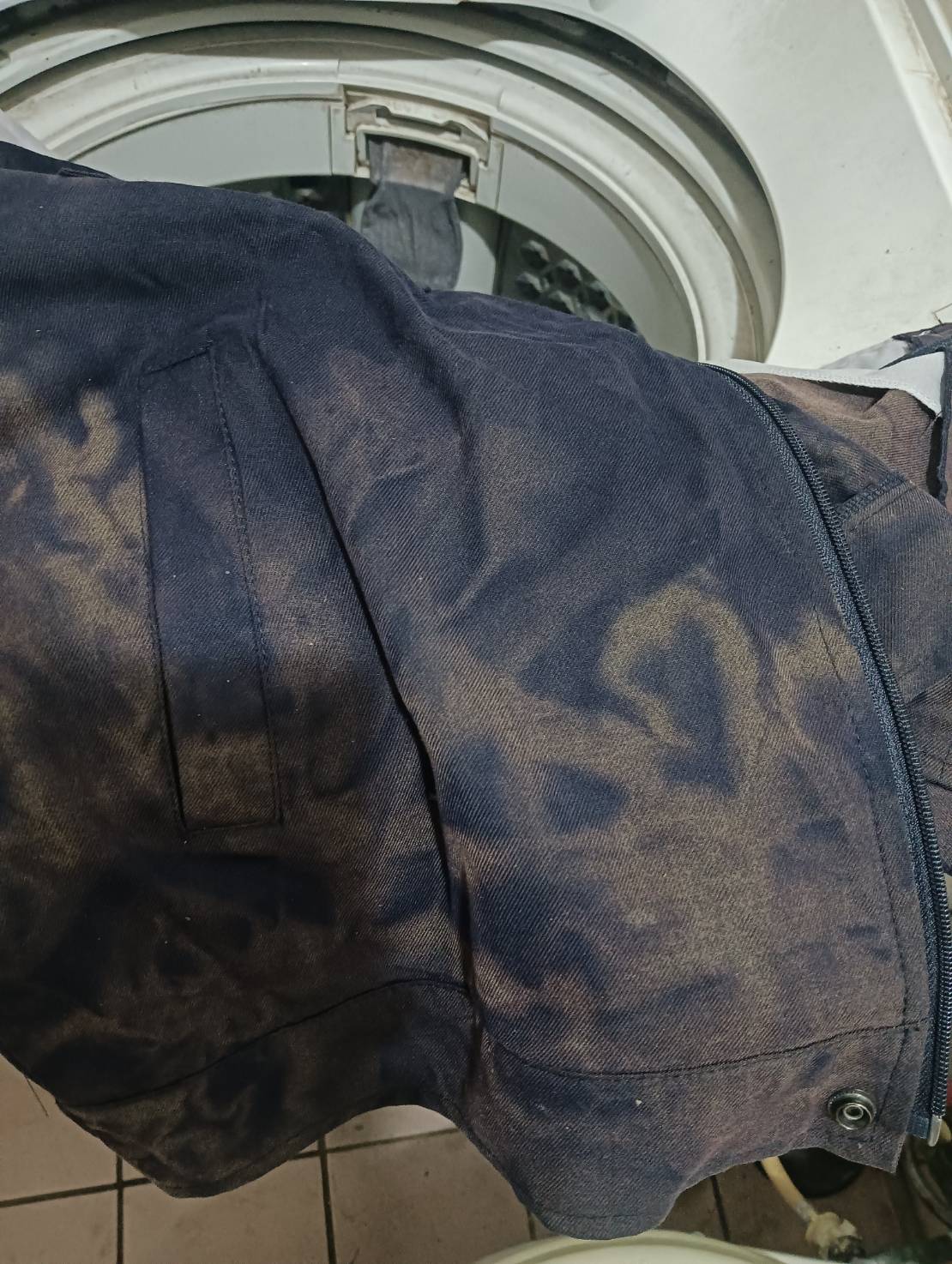
A dark-blue jacket or a black top comes out of the wash with a large, irregular brown or reddish-brown patch, and many people’s first thought is: “Did something dirty get on it? Another wash will take it out, won’t it?”
If this garment has come into contact with chlorine bleach (for example household bleach, whose main ingredient is sodium hypochlorite), those patches are usually not “dirt,” butthe original colour, destroyed. We’ve set out the reasons, what can be done, and how to prevent it at home, for your reference.
1. What did the bleach do? The colour was “destroyed,” not “covered”
Household chlorine bleach is a very strong oxidiser. According to Scientific American and the Department of Chemistry at the University of Bristol, it attacks the structures in the dye molecule that are responsible for colour (the chromophores), destroying or changing them so the dye can no longer absorb visible light, and the colour disappears.
So a patch caused by bleach is the opposite of a stain such as coffee or soy sauce, where “an extra layer of something” has been added:it is a loss of colour. There is nothing on the fabric to wash off, and so it cannot be washed back.
The American Cleaning Institute lists “fading caused by improper use of bleach” asirreversible; the Drycleaning & Laundry Institute (DLI) also states that fading caused by an oxidising bleach cannot be restored, and can only be covered by recoloring or by redyeing the whole garment.
2. Why do dark blue and black turn brown or reddish-brown?
Dark blue and black are often not a single dye, but a mix of several colours.
Experiments described in Scientific American show that dyes of different colours are destroyed by bleach atdifferent speeds: in a mixed colour, the colour that is destroyed first disappears, and the colours that remain show through. Explanations from laundries and cleaning brands also mention that after black or dark-blue clothes meet bleach, orange, reddish-brown or pink patches often appear, rather than the garment simply going white.
That’s also why the colour of the patches is often uneven, with irregular edges: the amount of bleach that splashed or ran differs from place to place, and so does the degree of destruction.
3. So can it still be saved?
Honestly:the original colour cannot come back. Neither cleaning nor stain removal can turn destroyed dye back into what it was.
What can be done isredyeing, putting the colour back. For a single garment such as a dark-blue piece, redyeing can be assessed, to make the colour of the whole garment more consistent and the patches less obvious.
Before you send it for dyeing, though, there are a few things to know first:
- After dyeing it will be more even, but it will not be identical to the original. Where the bleach has already damaged the fabric, it takes dye differently from other areas, and after dyeing you may still see light and dark. The Drycleaning & Laundry Institute says this kind of fading can only be “covered”; Rit Dye’s official notes also remind us that fabric damaged by bleach and by the sun is harder to dye, and there is no certainty it can be covered completely.
- Stitching and zips may not take the dye. The stitching on many garments is 100% polyester, and a dye that suits cotton usually will not dye polyester, so the stitching stays its original colour (Rit Dye’s official explanation). Metal zips and metal fastenings will not take dye either.
- The fabric itself may already have become brittle. The American Cleaning Institute reminds us that improper use of bleach may also cause holes and thinning; wool, silk and elastane yellow when they meet chlorine bleach, and the yellowing cannot be removed.
4. How can you prevent this at home?
- Look at the care label first: a triangle with a cross means do not bleach; a triangle with diagonal lines means only a non-chlorine (oxygen) bleach may be used. If a coloured garment needs bleaching, choose an oxygen bleach labelled as suitable for coloured clothes.
- Don’t use chlorine bleach on coloured clothes: the American Cleaning Institute suggests using chlorine bleach only on white garments whose care label allows it.
- Don’t pour bleach straight onto clothes: always dilute it according to the product instructions, or add it through the washing machine’s bleach dispenser.
- Don’t wash coloured clothes in the same load as bleach: after a white load with bleach, before the next load of dark clothes, you can first check that the machine and the dispenser have no residue. Clorox’s official notes have mentioned that if the bleach dispenser isn’t rinsed clean, residue may carry into the next load and cause unexplained fade patches on dark clothes.
- Wear old clothes when you use bleach for cleaning: when you clean the bathroom or kitchen with bleach, clothes are easily splashed.
- If it is splashed, rinse first with plenty of clean water: take the garment off at once, and rinse from the back of the fabric with cold water for a few minutes, so the bleach leaves the fibres as quickly as possible.Don’t add vinegar or other cleaners: chlorine bleach mixed with acidic products or ammonia produces a toxic gas.
- Watch out for other things that also “bleach”: the Drycleaning & Laundry Institute reminds us that some hair-dye products, acne creams containing benzoyl peroxide, and disinfectant cleaners are also oxidisers, and may likewise cause local fading on clothes.
When clothes are stained by bleach, it really is heartbreaking. If you’re not sure whether the patches on a garment were caused by bleach, or you want to know whether it can be redyed, you’re welcome to send us a photo first and ask.
Article Comments
No reviews yet