
Artificial and Natural Fragrances: A Full Reveal
An account of the real differences between artificial and natural fragrances, covering their sources, manufacture, compo...
2025-10-31 09:37Views: 785
Fragrances are part of our lives — not only in everyday products, but in food too. The harm they can do should not be overlooked. Avoid products with artificial fragrance, and have an in-body Huan Jin An test, so we can together build a healthy living environment.
|
Contents:
|
What is a fragrance?
A fragrance is a “chemical mixture,” blended from several natural or synthetically made compounds, that presents a smell or a flavour. In everyday life, whether in food or in household products, fragrances can be found; they are used more than one might imagine.
Fragrances can be divided simply into two broad kinds: natural and artificial. Natural fragrances have natural ingredients, and may be extracted from plants, flowers and spices — lemon essential oil, vanilla extract and the like. Artificial fragrances are made by chemical synthesis. Because the scent is long-lasting and stable, they are widely used commercially, as in drinks and fruit flavourings.
The fixative in an artificial fragrance, phthalates, is a common environmental hormone. It interferes with the body’s endocrine system and affects hormone balance. Long-term contact may cause precocious puberty in children, or infertility, and so on. It is therefore suggested that you choose a fragrance of natural origin, or one whose ingredients are clear, reduce unnecessary contact, and at the same time test the level of environmental hormones in the body, to protect your own health and that of your family.
Source of information:A rounded look at fragrances in everyday life
Where are fragrances commonly found?
| Common types | Purpose | Common fragrance examples |
|---|---|---|
| Food and drinks | To add flavour to food and make it more appealing. |
|
| Personal-care products | To add a scent to the product and raise the pleasure of using it. |
|
| Household products | To improve the smell of the surroundings, cover other odours, and make the living space more comfortable. |
|
| Cosmetics and beauty products | To add a scent to the product and improve the experience of using it. |
|
| Medical and oral-care products | To improve the smell, mask the taste of a medicine or a chemical ingredient, and make the product more acceptable to use. |
|
| In-car and environmental fragrances | To improve the smell in a car or in a space. |
|
| Industrial and other products | To cover chemical raw materials or other odours, and make the product more acceptable |
|
| How fragrances are made, and the process | Process | Explanation |
| The process of manufacture |
|
|
| The process of use |
|
|
| Harms a fragrance may cause |
|
What harm do fragrances do to the body?
Some of the ingredients in a fragrance are environmental hormones that affect health. They enter the body through contact or breathing, and then affect health.
The environmental-hormone ingredients in a fragrance are mostly found in everyday products, and are not usually present directly in food. When the body is affected by environmental hormones, the following health conditions may appear.
- Phthalates
Phthalates are also a kind of plasticiser, and can also be used as a fixative. They are often used in lotions, perfume, cosmetics and the like, and enter the body through absorption by contact with the skin.
- Synthetic musks
Among them, musk xylene (a nitro musk) and galaxolide (a polycyclic musk) have been shown by research to affect hormone balance in the body, and are also closely linked to the development of cancer.
- Other chemical ingredients
Volatile organic compounds (VOCs) are also a kind of endocrine-disrupting substance.
The environmental-hormone ingredients in a fragrance are mostly found in everyday products, and are not usually present directly in food. When the body is affected by environmental hormones, the following health conditions may appear.
- Interference with the endocrine system
They may mimic or suppress the action of hormones, leading to a hormone imbalance, and causing an irregular menstrual cycle or precocious puberty.
- Effects on reproductive health
They may lower sperm quality and affect the health of the ovaries, and may lead to abnormal reproductive function.
- Fetal development
If a pregnant woman is exposed to environmental hormones for a long time, it may affect the fetus’s development and brain development, and lead to learning difficulties and inattention in the child.
- A higher risk of chronic disease
Long-term exposure may interfere with fat metabolism, and raise the risk of obesity, diabetes, some cancers (such as breast cancer), high blood pressure or cardiovascular disease.
- Effects on the immune system
They may lower immunity, leading to reduced resistance to viruses and bacteria, and a higher incidence of allergic disease.
Artificial fragrance vs natural fragrance
Fragrances are further divided into “artificial fragrance” and “natural fragrance,” the two broad kinds. They differ clearly in composition, how they are made, and their uses, and the harm they do to the body is also greater with artificial fragrance.
A natural fragrance is a scented substance extracted from natural raw materials. The ingredients are more natural, and it is relatively safer, but the extraction is more complicated and the cost relatively higher. An artificial fragrance is a chemically synthesised product: the cost is low, the scent is stronger and it lasts longer, and it is suitable for mass use. A natural fragrance, though natural, costs more; an artificial fragrance is economical, but should be used with care.
Source of information:Is a fragrance the same as an essential oil? A fragrance ‘≠’ an essential oil!
What kinds of fragrance are there?
The following are common kinds of fragrance. They are also used very widely: from everyday food and drink to everyday products, fragrances are present.
| Fragrance | Category | Ingredients | Use |
|---|---|---|---|
| Vanilla extract | Natural fragrance | The main ingredient is vanillin, extracted from vanilla pods | Often used in cakes, ice cream and drinks, to add flavour. The aroma is natural but the cost is higher. |
| Lemon essential oil | Natural fragrance | The main ingredient is limonene, extracted from lemon peel by distillation or condensation | Often used in sweets, drinks and cleaners, to give a fresh lemon taste, and often used in natural products. |
| Lavender essential oil | Natural fragrance | The main ingredients are linalool and linalyl acetate, extracted from lavender flowers by distillation | Often used in shampoo and perfume, with a soothing lavender scent, and often used in natural skincare. |
| Peppermint fragrance | Natural fragrance | The main ingredients are menthol, menthone, neomenthol and isomenthone | Often used in toothpaste, chewing gum and mouthwash, to give a cool mint taste. |
| Strawberry flavouring | Artificial fragrance | The main ingredients are ester compounds such as ethyl butyrate, combined from several ingredients. | Often used in snacks, sweets and ice cream. The strawberry scent is rich and long-lasting. |
| Floral fragrance | Artificial fragrance | The main ingredients are synthetically made aromatic compounds, such as phenylethyl alcohol and geraniol. | Often used in laundry detergent, foundation and air fresheners. The scent lasts and is complex, and may contain phthalates. |
| Ocean fragrance | Artificial fragrance | The main ingredients are synthetically made aldehyde and ester compounds. | Often used in air fresheners and perfume, to give a sense of ocean freshness. The scent is stable but is not of natural origin. |
| Fruit fragrance | Artificial fragrance | The main ingredients are synthetically made ester and aldehyde compounds. | Commonly found in lipstick, hand cream and drinks, to add a fruit aroma. The scent lasts and the colours are rich, but they may contain environmental hormones. |
What are the ingredients of an artificial fragrance?
An artificial fragrance is a compound made by chemical synthesis, and is widely used in food, health foods, household products and so on.
Common ingredients:
- Ester compounds (such as ethyl butyrate).
- Aldehyde compounds (such as octanal)
- Aromatic compounds (such as phenylethyl alcohol and geraniol)
- They may contain environmental hormones, such as phthalates or a synthetic musk (galaxolide).
Features of an artificial fragrance:
- Low cost: made by chemical synthesis, the production cost is low, and it is suitable for large-scale commercial use.
- A rich scent: the scent is rich and highly durable, and suitable for products that need a long-lasting fragrance, such as laundry detergent and air fresheners.
- High stability: not easily affected by temperature or humidity, and with a long shelf life.
- Many kinds of aroma: it can imitate a natural aroma (such as strawberry or coconut) or create an aroma (such as ocean).
- Health risks: it may contain environmental hormones. Long-term exposure may affect the endocrine system and cause chronic health problems.
What are the ingredients of a natural fragrance?
A natural fragrance is a scented substance extracted from natural raw materials, mainly from plants, flowers, fruit or spices, and is widely used in food and natural skincare.
Common ingredients:
- Mainly a single natural compound, or several
- Vanillin: extracted from vanilla pods.
- Limonene: extracted from lemon peel.
- Linalool and linalyl acetate, extracted from lavender flowers.
- Santalol, extracted from sandalwood
- Menthol, extracted from mint leaves.
Features of a natural fragrance
- It contains no synthetically made ingredients, and the composition is simple.
- Natural origin: the ingredients are natural, and meet the demand for natural products.
- A natural aroma: the scent is closer to nature itself.
- High cost: the extraction is complicated, and the cost of production is high.
- Lower lasting power: the scent is easily affected by temperature and humidity, the shelf life is short, and special storage conditions may be needed.
- High safety: it contains no artificial chemical ingredients, and the health risk is low.
How can we reduce the harm from fragrances?
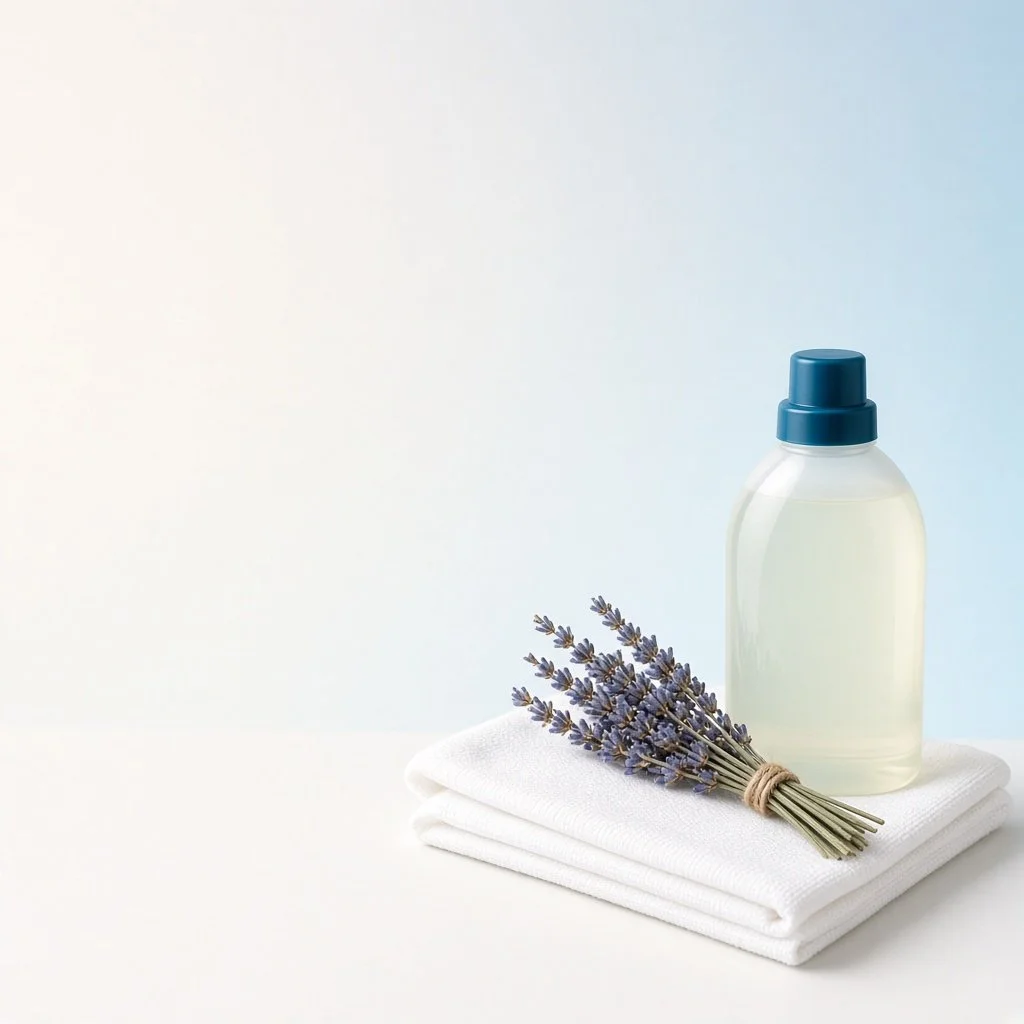
Faced with the harm from fragrances, we can lower the harm of contact and protect our health by preventing it in advance and by testing from a scientific point of view.
- Choose natural products, or products labelled unscented
Prefer to buy products labelled “unscented,” or that use a natural fragrance, and avoid products that say “Fragrance” or “Parfum,” because these may hide environmental hormones.
Check the ingredient list, and avoid products that contain phthalates or synthetic musks.
- Have a body test done
Pay attention to test results for products and foods that contain fragrance, and at the same time test yourself:the [Huan Jin An] environmental-toxicant hazard-factor test. It analyses environmental hormones, toxic elements and nutritional elements, and can help you understand how far the body is affected by environmental hormones and toxic elements, and also assess whether your own nutritional elements are lacking or in excess.
- Use fewer products that contain fragrance
Use less perfume, air fresheners, fragrant lavender and other high-concentration fragrances, and switch to natural substitutes.
Choose an unscented laundry detergent or cleaner, to avoid fragrance remaining on clothes or in the environment, and to reduce the risk of contact with the skin and of inhalation.
- Keep the space ventilated
When using a product that contains fragrance (such as a cleaner or perfume), keep the room ventilated, to reduce the inhalation of volatile organic compounds (VOCs).
Avoid using an air freshener in a closed space for a long time, to lower the concentration of fragrance in the air and protect the health of the airways.
- Pay attention to the sources of fragrance in the diet
Choose fresh, unprocessed food, and eat fewer foods that contain artificial fragrance (such as sweets and drinks).
Choose food packaged in glass, or in packaging that does not contain plastic, to avoid phthalates being released from plastic packaging into the food. - Source: https://www.genehealth.com.tw/knowledge/197
Related Services & Prices
If you'd like these cleaned, here are the prices and pickup & delivery options for this type of item. We quote the final price after checking the garment condition at pickup, and only clean once you agree.
Article Comments
No reviews yet