
How to Wash a Backpack or a Hiking Pack
How to clean a dirty backpack or hiking pack. This article covers how to identify the fabric and coating, and the princi...
2026-10-19 09:40Views: 132
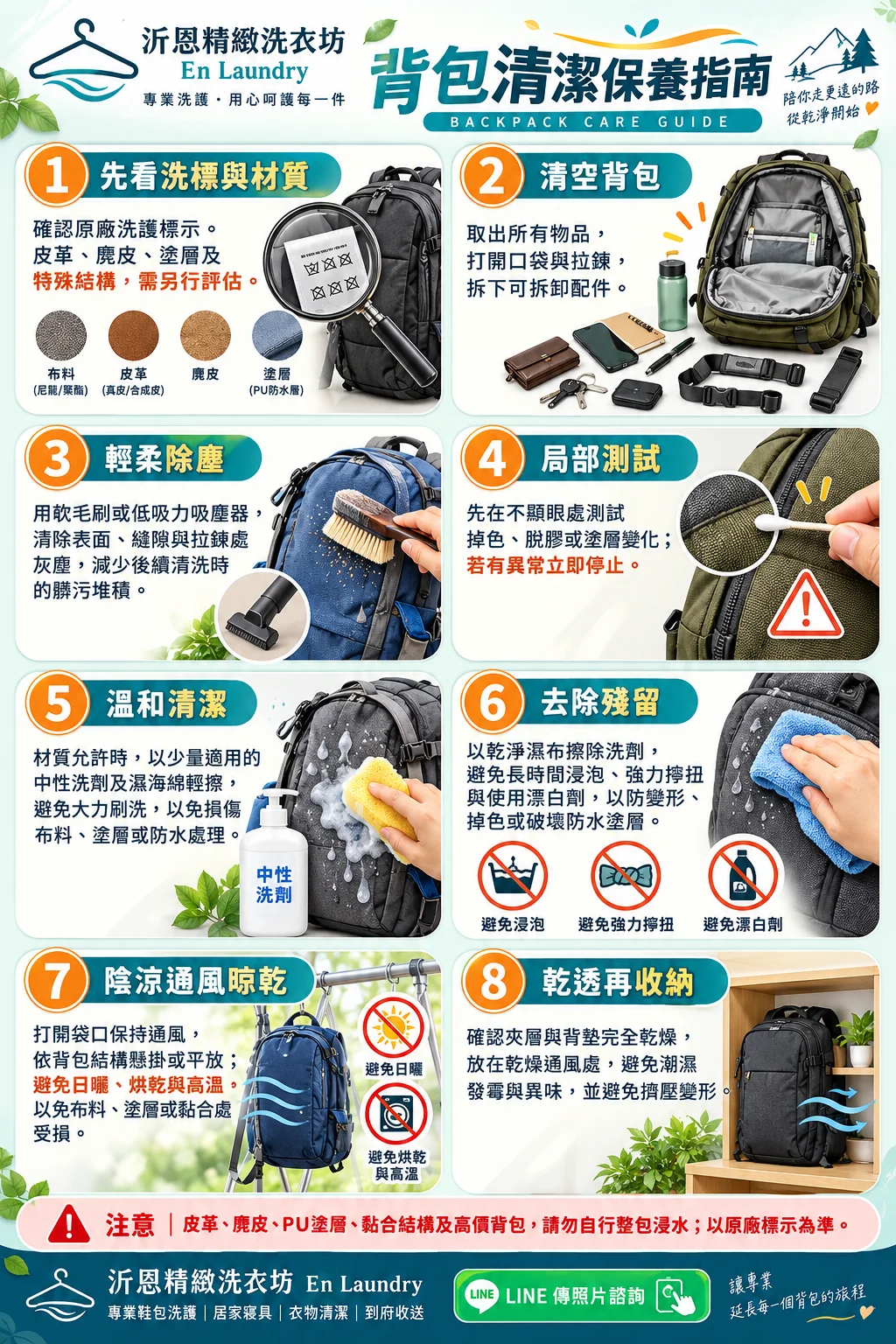
The backpack is dirty — how should it be cleaned?
From identifying the material and local cleaning through to air-drying and storage, we’ve set out eight practical steps. It’s not a matter of “the harder you wash, the cleaner it gets,” but of finding a balance between cleaning and protecting the material.
A backpack often contains, at the same time, nylon or polyester, foam, plastic buckles, zips, adhesives and a waterproof finish. Different materials don’t tolerate moisture, detergent and friction in the same way. Sochecking before you clean matters more than putting the backpack straight into water.
Three principles to remember before you clean
- Follow the care label and the brand’s instructions first
- If the maker clearly restricts soaking, machine washing or taking the structure apart, those restrictions should be followed.
- Start small, and with a mild treatment
- Dust it dry first, then test and treat locally; don’t rush into washing the whole bag.
- After cleaning, it must be truly dry
- Pay particular attention to the back pad, interlayers and the bottom of the bag, and don’t seal it away for storage before it’s dry.
Eight steps to clean a backpack
Check the care label and the material
Look at the care label inside, the brand’s website and any notes on the accessories. First identify the fabric, leather, suede, coating, back pad, frame and bonded areas, and confirm whether it can be washed.
Pay particular attention:a backpack that already has peeling, a sticky feel or a coating coming off should not be soaked straight away.
Empty it, and remove any detachable accessories
Take out everything in the pockets and interlayers: electronics, paper and small items. Open the zips and loosen the cords; treat detachable accessories separately according to the brand’s instructions.
Pay particular attention:don’t force a fixed frame or support rods apart yourself.
Dust it dry first
With a soft brush or a low-suction vacuum, remove surface dust, crumbs at the bottom of the bag, and grit in the zip gaps, so dirt is less likely to spread in a later wet clean.
Test first in an inconspicuous place
With a little clean water and the detergent you plan to use, test on a hidden area such as an inner seam. Watch for colour loss, water marks, whitening, unusual adhesive behaviour, or a change in the surface coating.
The principle of the test:check again only after it is fully dry; if anything unusual appears, stop.
Gentle local cleaning
Where the material allows, use a little diluted mild detergent with a soft cloth or sponge, and gently wipe sweat stains and dirty areas. Avoid a hard brush, too much force, and a long soak.
Cleaning products:prefer a specialist bag cleaner recommended by the maker.
Remove leftover detergent
For a backpack that shouldn’t be soaked, wipe repeatedly with a clean, slightly damp cloth. Only styles the maker allows to be washed should be hand-washed and rinsed with clean water in a suitable way.
Avoid using:bleach, fabric softener, a strong alkali cleaner, and solvents that have not been confirmed as suitable.
Cool, ventilated, thoroughly dry
Open all pockets and zips, and dry in a cool, ventilated place. Choose a way of supporting or hanging it according to its weight and structure, and confirm that the foam back pad, interlayers and the bottom of the bag are completely dry.
Don’t take risks to speed it up:avoid strong sun, a tumble dryer, and a heat gun held close.
Only store it once you’ve confirmed it’s dry through
Confirm there is no damp and no leftover detergent, then put it in a dry, ventilated space. Don’t seal a backpack that still has moisture into a plastic bag, and don’t leave it under heavy pressure for a long time so that it distorts.
Different materials, different ways of cleaning
| Common types | A more conservative approach | Risks to watch |
|---|---|---|
| Ordinary nylon / polyester fabric bags | Dust and clean locally first; if the maker allows, a gentle hand wash can be considered. | Colour fastness, prints, and drying of the back pad. |
| PU coating / waterproof finish | Wipe gently according to the maker’s instructions; avoid high heat, strong rubbing, or soaking on your own initiative. | Delamination, a coating coming off, a sticky feel, and a change in waterproof performance. |
| Leather / suede trim | Prefer to have it assessed first by a professional with experience of those materials. | Water marks, fading, stiffening, and loss of oils, among other things. |
| Stiff, bonded or composite structures | Don’t take them apart yourself; start with a local treatment that uses little water. | Distortion of the lining, failure of the bond, and incomplete drying. |
| A detachable rain cover | Check its care label separately; if the maker restricts soaking, clean it locally with a damp cloth. | Damage to the water-repellent finish and to the seam-sealing layer. |
The four questions customers ask most
Can a backpack go straight into the washing machine?
Many outdoor-backpack brands don’t recommend machine washing, mainly because of the structure, the coating, and hardware knocking together. Unless the maker of that model clearly allows it, don’t machine-wash it yourself.
Will it dry faster in the sun?
Long periods in direct sun are not recommended. Ultraviolet light and high heat may speed up deterioration of the fabric or the finish. Prefer a shaded, well-ventilated place.
If the backpack smells, is it enough to cover it with a fragrance?
A scent is no substitute for cleaning. First confirm whether the source is sweat, leftover food or damp, then choose a cleaning method according to the material and dry it thoroughly.
It’s already sticky and peeling — can it still be washed?
It may involve ageing of the coating or the adhesive. Cleaning may not restore the original performance, and may make the peeling more obvious. We suggest assessing it first, then treating it.
Not sure whether your backpack can be cleaned?
You can send photos on LINE of the backpack’s appearance, the care label, the stains and any damaged areas, and EN Laundry will first help you assess the direction of cleaning. The actual treatment is based on an inspection of the material in person.
References
Osprey’s official backpack-cleaning guide, deuter’s official backpack-cleaning advice, REI Expert Advice。
This article is general care information. Differences of brand, model and material should follow the maker’s instructions first; we cannot guarantee that every stain or existing injury can be restored.
Related Services & Prices
If you'd like these cleaned, here are the prices and pickup & delivery options for this type of item. We quote the final price after checking the garment condition at pickup, and only clean once you agree.
Article Comments
No reviews yet